Visualizzazione post con etichetta Italianities. Mostra tutti i post

giovedì 29 marzo 2012

Other landscapes and beyond

My Inov-Art adventure is finally over.
The closing meeting was last February in Guimarães (Portugal), 2012 European Capital of Culture.

The Inov-Art Program is a one-of-a-kind program that, on its 3rd edition in 2011, provided 150 grants for professional internships in any art field, to be carried out outside Portugal. Internships lasted 3 to 6 months, from July to December 2011.

It was also open to non-Portuguese that have lived in Portugal for at least one year.
I don't know any other country that has such a program and wants to invest so much in providing professional experience for culture-related jobs.


Inov-Art is founded by the Portuguese General Direction of the Arts (DGArtes), part of the former Ministry of Culture. Yes, FORMER, because the new Portuguese prime minister, Mr. Passos Coelho, elected early in 2011 summer, ELIMINATED the MINISTRY OF CULTURE.

Can a country live without culture?

Giulio Tremonti, former Italian Minister of Finance, said "You cannot eat with culture".
Dear Giulio, you are sooo wrong.
It is an important business, as many economic studies prove, and I shouldn't be the one to say it.


Wherever you are from, have you ever been abroad? What do foreigners know about your country? What is the first thing that pop into their heads?


I already described what happens as people find out that I'm Italian (http://landscapesofmajesty.blogspot.it/2011/11/italian-pride-and-foreign-prejudice-1.html).
They think of our "beauties". But they only know the old ones. Why?

1: These beauties have had some centuries to promote themselves and consolidate their fame.
2: There so old that they are remarkable only because of that.
3: More recent art is not promoted (I don't mean at all but not as much as it should be).

But this is Italy. It needs a huge change of conceptual landscapes - a changeover for fresh and new people and thoughts. And it needs to go beyond the comfort of the conviction that our beautiful artistic and naturalist landscapes are a certainty, for if we don't take care of them, they will simply disappear. 


It's been a long time since the Homo Sapiens lived only for responding to his biological needs.

What is your country famous for? What makes it recognizable?

Why do people want to visit it and get to know it better?

venerdì 6 gennaio 2012

Known Flying Objects in Holy Days

(English below)
In una mattina tra dicembre e gennaio, ogni bambino si sveglia entusiasta per aprire i doni lasciati da una magica visita notturna.

In Italia, il Donatore cambia a seconda di dove sei nato. Ciò in cui credi è una conseguenza, difficilmente è una scelta.
(Questa criterio è applicabile anche ad un'altra serie di convinzioni.)

Le varie figure volanti convivono in un sincretismo non senza contraddizioni, ma i bambini non ci fanno caso.
In percentuali diverse, credono un po' a tutto. Anche perchè in Italia ogni scusa è buona per festeggiare. (E per mangiare.)

Quale che sia il Donatore di riferimento per ogni bambino, il procedimento non cambia.

Fase 1): Inoltrare la propria richiesta:
Sotto forma di lettera (la più usata), preghiera (per gli scrittori pigri) o fioretto (per gli zelanti).
Non valgono le lettere minatorie.

Fase 2): Preparare l'accoglienza per il Donatore:
Personalizzata in base alle sue esigenze: cibo, indumenti, rifornimento per il mezzo di trasporto, etc.
Non vale lasciare il biglietto "Serviti pure" sul frigo.
Fase 3): Attesa:
Si inganna necessariamente dormendo perchè in nessun modo è permesso vedere il Donatore, pena conseguenze indicibili come per esempio non ricevere nulla.

Fase 4)Godersi i propri doni:
Il ringraziamento può essere procrastinato fino al prossimo dicembre, quando sarà necessario stilare le nuove richieste e un po' d'educazione, in quel caso, può essere utile.

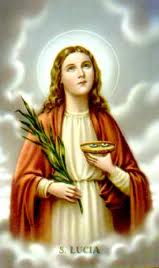
Nella lista dei Donatori appassionati di visite notturne, Santa Lucia è la prima, tra il 12 e il 13 dicembre, ma passa solo in alcune città.
Lei è la santa cieca, povera, scalza e giunge con il suo asinello, che è la sua guida, avvolta in un aura di luce.
Non si spiega come riesca a leggere le letterine dei bambini, a meno che l'asino non sia alfabetizzato. Non si può incontrarla perchè se no si diventa ciechi e comunque non è una bella visione perchè gira portando i propri occhi in bella mostra su un piatto. (Più che una santa, uno zombie.)

Il traffico aereo si fa caotico tra il 24 e il 25 dicembre.
Babbo Natale, il cui vero nome è Claudio o Nicola, rifornisce principalmente quelli che parlano inglese. Per questo in Italia non visita molta gente, ma nessun bambino dubita della sua esistenza, perchè è l'unico che si può incontrare, ma bisogna andare in America e fare la fila nei grandi magazzini.


Gulliver Jesus - 2010
In alcune zone del sud, in particolare a Napoli, nella stessa notte arriva Gesù Bambino.
Non ho mai capito come si muovesse. Sappiamo che sapeva camminare sulle acque (dalla Palestina a Napoli si può fare), ma non mi risulta che sapesse anche volare.
Non ho gli ho mai scritto, mi pareva esagerato: appena nato, scaldato dal fiato di un bue e di un asino, in mezzo alla paglia...dai, non è chiedere un po' troppo ad un neonato del terzo mondo?


In cammino coi punti Esselunga - 2011
Gli ultimi ad arrivare sono i Re Magi, il 6 gennaio. A Gesù portarono oro, incenso e mirra, ma nessun bambino normale glieli invidia. Aspetta, invece, i dolci doni di una vecchia strega a cavallo di una scopa, la Befana. Se sei stato cattivo, la Befana ti porta il carbone, ma siccome in Italia non ci sono miniere di carbone, non ci sono neanche bambini cattivi. (Questa stessa logica, nel mondo adulto, é già stata applicata anche in alcune faccende legali.)


Siccome da qualche anno non ricevo nulla nonostante sia stata brava (sarà perchè sono difficile da rintracciare perchè non ho un indirizzo fisso?), comincio a pensare che forse questo team di assi delle consegne notturne sia oberato di lavoro.

Vorrei proporre di introdurre un nuovo Donatore: pure lui é un re, un padre e una stella brillante.
Non é ufficialmente riconosciuto come santo, ma per qualcuno lo é già.


Che possa splendere su di voi il sacro cuore di Elvis e inondarvi di doni bellissimi!

-----------------------
ENGLISH

One morning between December and January, every child wakes up excited for opening the gifts that some magical figure left overnight.

In Italy the Giver changes according to where you were born. What you believe is a consequence, rarely a choice. (Seems like this criteria is applicable to many other beliefs.)

There are various Known Flying Objects that coexist in a syncretism not without contradictions, but kids don't seem to mind. They believe in every on of them, in different percentages. Also because in Italy every reason is good for celebrating. And eating.

Whatever referent Giver a child has, the process doesn't change.

Phase 1): Submit Request:
In the form of a letter (mainly used), prayer (for lazy writers) or "fioretto"/making a resolution (for the eager ones).
No minatory letters.

Phase 2): Prepare welcoming for the Giver:
Customize according to the Giver's needs: food, clothes, fuel for transportation, etc.
No "Help yourself" post-it on the fridge door.
Phase 3): Wake:
It must be in the sleep for it is forbidden to see the Giver or you might get nothing at all.

Phase 4): Enjoy your gifts:
Thanking can be procrastinated until next December: it will be useful when submitting new requests.

In the list of the night-surfer Givers, Saint Lucy is the first, between 12th and 13th Dec, but she visits only some cities.
She is blind, poor, barefoot and is guided by her donkey. She is surrounded by a dazzling aura. It is inexplicable how she can read children's letters, unless her donkey is literate. You can't meet her for you'd turn blind and anyway it is no pleasant view because she wanders about with her own eye on a plate. (Rather a zombie than a saint.)

Air traffic intensifies in the night between 24th and 25th December.
Santa, whose real name is unknown (some call him Claus, some Nicholas; in Italy he is Daddy Christmas) mainly supplies children that speak English. That's way he doesn't visit many kids in Italy. However no one doubts he exists because he is the only one you can actually meet. You just need to go to the US and queue at some shopping mall.


Gulliver Jesus - 2010
On the same night, in some areas in Southern Italy and expecially in Naples, the Giver is Baby Jesus.
I never quite understood how he travelled. We know he could walk on water (from Palestine to Naples it's possible), but I didn't know whether he could fly or not.
I've never written him any letter: asking for toys and sweets to a just-born baby, heated by a bull's and a donkey's breath, in a straw cradle...c'mon, ain't it too much to pretend from a third world child?

On the Road - 2011
On 6th January, the last ones to arrive are the Magi or Three Wise Men. The bring gold, incense and myrrh for Jesus, but no normal kid desire that kind of stuff. They rather wait for candies from and old witch that rides a broomstick: the "Befana". If you've been a bad kid, Befana brings you some coal. But since in Italy there are no coal mines, there are no bad kids too. (Occasionally this very same logic has been applied to some legal matters in the adults' world.)


Since it's been a few years I haven't received anything, although I've been a good girl, (may it be because I have no fixed address?), I've started thinking that these night-surfers might be a bit overloaded with work.

That is why I would like to propose the introduction of a new Giver: he a king, a father, a big belly and a shining star.
He hasn't been canonized yet, although he is already a divinity for many.


May Elvis' Sacred Heart shine on you and cover you with wonderful gifts!


sabato 10 dicembre 2011

L'Europa é uno "slimer" e i miei stereotipi geografici - Versione Italiana del post precedente

C'è chi dice che la Storia é ciclica.
C'è chi, con Darwiniano atteggiamento, crede nel progresso, nell'evoluzione.
C'è chi, storiografo amatoriale, sostiene la teoria della regressione.

Quale che sia la direzione che stiamo prendendo, avanti, indietro o in loop, la stiamo prendendo insieme, nonostante tutto.

Le mie considerazioni riguardano l'Europa e l'essere europei. Mi spiace per (alcuni tra) i Britannici ma, sì, sto parlando anche di voi.


Eccoci ancora sulla questione dell'identità. Io credo fermamente che esista un'identità europea. Ne ho avuto la sensazione chiara parlando e vivendo con persone di altri paesi europei e altri continenti. Non so ben bene che cosa sia, ma anche gli altri hanno avuto la stessa sensazione, non senza esserne sorpresi.

L'Europa é come lo slimer: puoi cercare di tirarlo finché vuoi ma non se ne può staccare una parte. Se lo metti sul bordo della scrivania, la parte esterna comincia a colare verso il basso e prima o poi trascinerà il resto con sé.

Mi sembra però di sapere davvero poco dell'Europa, nonostante abbia vissuto in alcuni dei suoi paesi. Ho solo un mucchio di stereotipi, ossia si immagini mentali, su questo e su quello. Sono indubbiamente superficiali. Sono anche basati su fatti reali. Quando sono sorpassati possono diventare pericolosamente stupidi.

***

Quindi ecco come vedo l'Europa in una manciata di osservazioni grossolane:
(Non dimentichiamo che sono italiana)

Tutto quello che é al di sopra delle Alpi é Europa del Nord.
Tutto quello che tocca il Mediterraneo + il Portogallo é Europa del Sud (con l'eccezione dell'80% della Francia), quindi ha qualcosa in comune con la mia temperatura sanguigna.

La Svizzera é un buco nero: gente con non participa a niente, felice nella propria torre d'avorio egoista. Le sue città sono così perfette che quando ci si cammina non si osa nemmeno respirare. E poi é una grossa bugia che il loro cioccolato é molto buono L'Austria ha le stezza bellezze ma più arte e storia e della gran pasticceria.

Gli Scandinavi e i Finlandesi saranno pure i più ricchi e i più biondi ma non mi stupisce - dopo essere svenuta in un aeroporto norvegese senza che nessuno mi soccorresse né se ne accorgesse – che siano posti da depressione e che abbiano il più alto tasso di suicidi in Europa. (Sono svenuta, non di proposito, qui e là nel mondo ed ho avuto riscontri molto diversi.)

La Germania é ammirabile – anche se i tedeschi sono un po' quadrati per loro stessa ammissione. Sono l'unico paese che ha saputo gestire in maniera matura il rapporto con il loro passato complicato. Tutti gli altri hanno ancora molta strada da fare.

L'Olanda e la Danimarca sono ben organizzate, molto civili, piene di cultura ed arte. Se soltanto avessero l'eccezionale patrimonio gastronomico e il clima dei paesi del sud...

Il Luxemburg é minuscolo.

L'Islanda é geisers e Bjork.

***

L'Italia é una e lo sembrerà sempre, anche quando i Mondiali sono finiti e nonostante la Lega Nord (che poi, per coerenza, dovrebbe semplicemente smettere di essere pagata dal governo italiano, se non lo vogliono).
Stessa cosa vale per Spagna o Belgio. Noi o voi possiamo pur sentire quelle incommensurabili differenze interna ma fatto sta che, tutto ciò che sta al di fuori dei nostri confini nazionali, ossia il resto del mondo, é miope cioé quando ci guarda vede una silhouette.

Gli Imperi sono finiti. Tutto quello che dovrebbe esserne rimasto é la vergogna, invece sembra che l'orgoglio abbia il sopravvento nella maggioranza.

Il Regno Unito é un'isola e non due, come piace pensare agli inglesi. L'Irlanda é più verde e più amichevole.

Nessuno vuol più imparare il francese.

***

L'Europa dell'est é ancora un punto di domanda per me. Questo succede ad essere nati quando L'URSS esisteva ancora ed essere stati cresciuti da We are the World di Micheal Jackson.


Si dice che quello che impari da bambino non te lo scordi più (E la tv mi ha insegnatp più di quello che avrei voluto).

L'Ex-Jugoslavia non esiste ma non sono sicura di riuscire a fare una lista di ciò che ne é venuto fuori perchè, da quando é finita la guerra, non se n'è più sentito parlare, e questo é colpa del pessimo giornalismo italiano. Tutto quel che so é la forte ondata migratoria subita dall'Italia negli anni 90 e, francamente, ora é abbastanza integrata perciò non ho abbastanza elementi per farne uno schizzo identitario nella mia mente.

Della Romania si dicono un sacco di cose negative. La Bulgaria e l'Ungheria mi sono sconosciute e confondo sempre le loro capitali.

La Polonia ha prodotto il primo, e probabilmente l'ultimo, Papa simpatico, intrattenitore e con il sentimento della vergogna.

La Cecoslovacchia... no, aspetta, sono due.

"EstoniaLettoniaLituania" le ho imparate così, tutt'insieme.

***

Mi ricordo la lezione di georgrafia europea a scuola.

Mi ricordo anche che, quello che poteva essere un giorno, una settimana o un mese più tardi, la maestra si é dovuta rimangiare tutto perchè l'URSS é esplosa in una miriade di paesi che, per la prima volta, sono apparsi nel mio confuso planetario mentale.

In quel momento ho deciso che comunque non ci sarebbero rimasti. Non c'era motivo di impararne le capitali, la conformazione georgrafica, il clima, gli usi e costumi, perchè tanto, prima o poi, le cose sarebbe cambiate...

***

A quel punto della mia vita, Michael Jackson e We are the world mi avevano insegnato due cose:

1) Ci sono bambini nel mondo che hanno la pelle del colore di quella di Micheal (che era ancora nero all'epoca) e questi bambini soffrono.

Gli credevo ciecamente, anche se non ne avevo mai visto uno nella mia vita. Avevo solo visto degli uomni alti e con la pelle molto scura, ben più scura di quella di Michael Jackson, e questi uomini vivevano vicino al mare perchè li incontravo solo sulla spiaggia, quando ero in vacanza, e cercavano di vendere salviettoni e occhiali da sole. Erano Marocchini o Vucumprà. Più tardi capii che i veri marocchini del Marocco invece assomigliano ad alcuni miei parenti meridionali.

2) Noi umani siamo diversi ma é una cosa bellissima perchè più colori ha il mondo, più ci si diverte. Dovremmo far finire tutte le guerre e le sofferenze e vivere in pace. Dobbiamo rendere il mondo un posto migliore perché noi, in particolare noi bambini, siamo il mondo e sorridiamo tutti e ci vogliamo bene.

Ora mi rendo conto di quanto, all'epoca, le campagne pubblicitarie di Oliviero Toscani per Benetton abbiano contaminato la mia interpretazione di quella canzone

"All The colours of the world"

Queste concezioni del mondo mi facevano commuovere all'epoca. Cercavo di applicarle e di risolvere i conflitti con i miei compagni di scuola, visto che comunque non c'erano bambini neri con cui potevo fare amicizia.

***
Perciò, perchè le cose dovevano essere diverse per le nazioni dell'ex-URSS?

Avevano litigato – come succedeva a me con i miei compagni -, erano arrabbiati, ma sarebbero comunque tornati ad essere amici, come me e i miei di amici!

Ero assolutamente certa che, nel giro di qualche mese, l'URSS si sarebbe riunita. Ecco perchè mi rifiutavo di impararne la nuova georgrafia.

Di fatto mi immaginavo il momento in cui avrebbero trasmesso in tv Gorbachov e tutti quei signori seri che si stringevano la mano per sancire la bace. Non sapevo molto di politica estera all'epoca, ma avevo quasi la certezza che in quel momento non si sarebbero detti "Pace, carote, patate", come me e i miei amici.

***
Sono giorni di grandi decisioni in Europa. Tutti uniti ma ognuno nella propria difficoltà, cercando di far funzionare la grande macchina e desiderando di compiacere il proprio pubblico privato in patria.

Lo stato britannico si é appena isolata con una tra le più sorprendenti mosse politiche. Io credo ancora che la soluzione sia stare tutti insieme e cambiare il sistema economico. Se quancuno affonda, gli altri affogano. Quindi meglio cedere un poco adesso che perdere molto dopo.

E nel frattempo, come fanno a Napoli....


TUTT'INSIEME ORA:
TIE'!

venerdì 9 dicembre 2011

Slimer Europe and geographical sterotypes - English version

Some think History is cyclic.
Some, with Darwinian attitude, believe in progress, in evolution.
Some amateur historiographers sustain regression.

Whatever direction we are heading to, whether forward, backward or in loop, we are in this together, despite everything.

My considerations are about Europe and being European. In these day is a big issue.
I'm sorry for (some of) the Brits but, yes, you're included.


Here we are, back again to the question of the identity. I do think that there is a European identity, I could feel it when talking and living with people from other European countries and other continents. I don't quite know what it is but the others felt it too, not without surprise.

Europe is like slime dough: you can try to stretch it apart as much as you want but the rest of it will follow. So, if you place it on the edge of your desk, part of it will slowly crawl down and the rest will drop as well, sooner or later.

But I really feel I know very little about it, although I lived in some of its countries. All I have is a bunch of stereotypes, that is mental images about this and that. They are superficial. They are partially based on real facts. Sometimes they're out of date and can become dangerously stupid.

***
So here's how I see Europe in a handful of brisk observations:
(Don't forget that I'm Italian)

Everything that is above the Alps is Northern Europe.
Everything that touches the Mediterranean sea + Portugal is Southern Europe (with the exception of 80 % of France), therefore has something in common with my blood temperature.

Switzerland is a black hole: people who don't take part in anything, happy in their selfish ivory tower. Their towns are so perfect you hardly dare to breath when you're there. It is a big lie indeed that their chocolate is very good. Austria has just the same beauties but has more historical art to see and great pastry.

Scandinavia and Finland might be the richest, and the blondest, but no wonder - after I fainted in a Norwegian airport and nobody helped or even noticed - that it's a depressing place that have the highest suicidal rate in Europe. (I fainted, not on purpose, here and there in the world and I had very different responses).

Germany is admirable - though Germans are quite square-minded, by their own admission. They are the one country that managed to cope best with their complicated past. All the others have a long way to go.

Holland and Denmark are well organisd, very civil, cultured and arty. If they only had the fantastic gastronomy and weather of Southern countries...

Luxembourg is tini-tiny.


Iceland is geysers and Bjork.

***
Italy is one and will always look so, even when the Football World Cup is over and despite the Lega Nord (that, then, should simply stop being payed by Rome central government, if they don't want it).
The same thing for Spain, or Belgium. We or you might feel our inner incommensurable differences but, at a slightly larger scale, such as the one outside our own national borders, the rest of the world is all myopic, they just see borders silhouettes.


The Empires are over. All that should be left is shame, but pride seems to win over in the majority.

The UK is an island and not two, like the English'd like to think. Ireland is greener and more friendly.

Nobody wants to learning French anymore.
***

Eastern Europe is still a question mark for me. This is the doom of being born when the USSR still existed and having been raised by Micheal Jackson's We are the world.


They say that what you learn as a child, you never forget. (And tv has taught me far more than I would have wished.)
Ex-Yugoslavia doesn't exist but I'm not too sure I could make a list of what came out of it, since I haven't heard much since the war was over, and I blame it on terrible Italian journalism. All I know is the huge immigration that hit Italy in the 90s and, frankly, is quite integrated by now, so I don't really have enough elements to create a draft of identity in my mind.

Roumania is much talked about negatively. Bulgaria and Hungary are pretty much unknown to me and I always switch their capitals.

Poland produced the first, and probably the last, ashamed, lovely and entertaining Pope.
Czeckoslovakia... no, wait a minute, they are two.
"EstoniaLettoniaLituania", that's how I learnt them, altogether.

***
I remember the lesson about European geography at school.
I also remember that, what could have been a day, a week or a month later, the teacher had to take it all back because the USSR exploded in what seemed to me a myriad of countries. These states made their appearance in my confused mental planetary.
I decided that they wouldn't stay, anyway. I decided it was no point to learn their capital cities, geographical conformation, climate, uses&costumes, for, some time soon, things would have changed...

***
At that point of my life, Michael 's We are the World had taught me two things:

1) There are children in the world whose skin colour is like Micheal Jackson's (who was still black at the time) and they suffer.
I believed him blindly, although I had never seen one in my life. I just had seen big men with a very dark skin, much darker than Michael's, and they lived somewhere near the seaside, since I only met them when I was on holiday on the beach, and they were trying to sell towels and sunglasses. They were Marocchini (Moroccans) or Vucumprà (distorted Italian for "Would you like to buy?"). I later understood that that Moroccan look like some of my family in Southern Italy.

2) We humans are different but this is beautiful because the more coloured the world is, the more fun. We should stop all the wars and the suffering and be in peace. We shall make the world a better place because we all - the children in particular - are the world and we all smile and love each other.
I realise now how much Oliviero Toscani's advertising campaigns for Benetton has actually contaminated my interpretation of the song at that time.
"All The colours of the world"
This concept made me emotional at the time. I tried to apply it and resolve the fights with my mates at school, since I knew no black child to be friend with.
***
So, why should things be different for the countries of former USSR?
They had a fight, just like those I have daily with my school mates, and they're angry with each other. But they will get back to be friend again, just like I do with my friends!

I was absolutely sure that, within a few months, the USSR would be back again as one. That's why I refused to memorise the new geography.

I actually figured in my mind the moment in which I will have seen on tv Gorbachov and all those serious men in suits shaking hands to ratify peace, like I did with my friends. I didn't know enough about foreign policy at the time, but I was quite sure they wouldn't have exactly used the words "Pace, carote, patate" (Peace, carrots, potatoes), just like we kids did.

***
These are days of big decisions in Europe. All united yet each in their own difficulty. Trying to make the big machine work and wanting to please one's own private national public.
Britain has just isolated itself with one of the most astonishing political decisions ever. I still think the solution is staying together and change the economical system. If somebody falls dead, the others will be wounded profoundly. So better let go a little now than a lot later.

And meanwhile, we could all do this old Naples remedy against bad luck.


ALTOGETHER NOW!

martedì 6 dicembre 2011

Italian pride and foreign prejudice 2: gesticulating

(Italiano in fondo)

It is a truth universally acknowledge that an Italian gesticulates a lot while speaking.
Andrea de Jorio,
La mimica degli antichi investigata nel gestire napoletano,
1832
No point in denying it, I confess: I do gesticulate.
A lot.
Even more when I'm speaking Italian.

Last week, on a beautiful sunny morning, I was at Victoria Station, London, talking in Italian in a way that could be described as frantic from a foreigner point of view, but it was simply an ordinary passage of information. 

In the middle of the sentence I (obviously) spread my arms open (for it is said to help the air emission, isn't it???) and my right palm landed on some poor girl's face.

Blushed with shame, I started the due and felt litany of "I'm sorry, I'm soooo sorry, I'm soooo very very very sorry!". I slapped her Good morning!, but she was so sleepy that she didn't even react; she smiled at me - yes, she managed to smile! - and kept on her way.

If she only knew I was Italian, she could have walked at a larger distance, since the station wasn't that crowded. I should start to wear a sing: Beware of the Italian speaking.
The fact is that gesticulating for an Italian is not a comic effect for Hollywood culture-based comedy or a childish inhability of controlling one's body movement. On the contrary, it is language.
Also, it's not just body language - like, i.e., if somebody avoids eyes contact, it means that he's shy.
I mean, it really is a part of the Italian language. Without it you just don't convey the meaning.
The way you move, the expression of your face along with the tone of your voice, its rhythm and your attitude are all very central in the Italian communication. Therefore words and their meaning can't be left alone with the sole exhalation.

In the Uk words are central. People take their meaning seriously. Linguistics is a deterministic art.
That is why their theatre production is still mainly text-based: because people listen to each other.

In Italy you first look at (and are looked at), then you listen, but what you see is very important, it's part of the conversation.

There are historical reasons for that.
Italian has been a written language for centuries, a stranger to the Italian until television started to unify the country linguistically from the mid-XX cent.
Don't blame us, we're still getting used to it.

But, please, once for all, learn how to you this gesture (below):
This is an expression of perplexity. It's being puzzled and wanting the other to know how so extremely puzzled we feel at his words/actions/thoughts.
It is not certainly something we "say" along with "Mamma mia!" or... "Panettone", as in the Uk tv commercial for some Christmas shopping.

As you learned what pizza, pasta, spaghetti, etc, is, please, learn this as well.

---------
E' una verità universalmente riconosciuta che gli italiani gesticolano molto quando parlano.
Non val la pena negare, confesso: ebbene sì, io gesticolo.
E parecchio.
Ancora di più quando parlo in italiano.

Settimana scorsa, in una bellissima mattinata di sole, mi trovavo alla stazione ferroviaria di Victoria, a Londra. Stavo parlando in italiano in una maniera che ad un occhio straniero potrebbe sembrare frenetica; in realtà era un ordinario passaggio di informazioni.

Nel bel mezzo della frase, come é ovvio, ho spalancato le braccia (perchè aiuta l'emissione dell'aria, mica vero???) e il mio palmo destro é atterrato sulla faccia di una povera passante.

Rossa di vergogna, ho cominciato la dovuta e sentita litania degli "I'm sorry, I'm soooo sorry, I'm soooo very very very sorry!".
Le ho dato un buongiorno a cinque dita, alla poverina, ma era ancora così addormentata che non ha praticamente reagito. Mi ha sorriso - ebbene sì, é riuscita a rispondermi con un sorriso! - ed ha continuato per la sua strada.

Se soltanto avesse saputo che sono italiana, avrebbe potuto prendere le distanze, giacchè la stazione era stranamente semivuota.
Dovrei cominciare ad appendermi un cartello al collo: Attenti all'italiano che parla.

Il fatto é che gesticolare per un italiano non é solo un effetto comico da sfruttare in una produzione Hollywoodiana o un'infantile incapacità di controllare il proprio corpo. Al contrario, il gesticolare é linguaggio. Non solo il così detto linguaggio del corpo come, per esempio, se uno evita il contatto visivo, significa che é timido.

Voglio dire, gesticolare fa parte della lingua italiana. Senza il gesto non passa il messaggio. Il modo in cui ci si muove, l'espressione facciale inseime con il tono della voce, il suo ritmo e l'atteggiamento, sono tutti elementi centrali nella comunicazione italiana. Di conseguenza le parole e il loro significato non possono essere lasciate sole con l'unico appoggio dell'emissione dell'apparato respiratorio.

Nel Regno Unito le parole sono al centro. Si prende il loro significato sul serio. La linguistica é un'arte deterministica. Ecco perchè la loro produzione teatrale é così tanto basata sul testo: perchè la gente ascolta gli altri parlare.

In Italia prima si guarda (e si é guardati), poi si ascolta, ma quello che si vede é molto importante, é parte della conversazione.
Ci sono ragioni storiche per tutto ciò.
L'italiano é stato una lingua scritta per secoli, uno straniero per il nativo italico fino a che la televisione non ha iniziato ad unificare linguisticamente la penisola dalla metà del XX secolo.
Non fatecene una colpa, ci stiamo ancora abituando.

Ma per favore, voi stranieri, una volta per tutte, imparate il significato di questo gesto:


Questo gesto esprime perplessità. Una risposta forte e chiara alle parole/azioni/pensieri di chi ci causa questa perplessità.
Non è sicuramente qualcosa che "diciamo" insieme ad un "Mamma mia" o a...."Panettone", come invece si vede in una pubblicità televisiva per incitare i britannici consumatori agli acquisti di Natale.
Come avete imparato che cos'è la pizza, la pasta, gli spaghetti, per favore, imparate anche questo.

venerdì 25 novembre 2011

Italian pride and foreign prejudice 1 : Geografia desiderata

(Italiano in fondo)
Being an Italian abroad doesn't let anyone indifferent. It never did. You always get some reaction.
Somehow it's always a jolly one.
Some times it's genuine admiration caused by wondrous Italian spirit.
Some times it's unbelieving laughter caused - again - by wondrous Italian spirit.

Whoever is a foreigner abroad will experience some comments about their nationalities but being Italian somehow seems to compel people to flood you with comments, positive or negative, thus leaving you flattered or flattened, accordingly.

I found myself plenty of times in the awkward situation of being with another foreigner whose nationality was soon ignored as I said :"I'm Italian", turning unwillingly the conversation's subject matter to this or that aspect of Italy.
There are very typical reactions that repeat themselves. A paradigmatic one is:

"Ah! Itaaaaalia!! (finger tips brought together and hands shaken under your nose in that shape. That gesture is an expression of perplexity and actually is what I would respond to such a unappropriated use)
"What part of Italy?"

I usually answer "the North" and occasionally, especially with Latins that understand what it means, I show off the Southern half of my blood. (Bloody Italian syndrome of captatio benevolentiae!)

"Where in the North?"

"For heaven's sake" I think "how many chances do you have to know Piacenza (or even Bologna sometimes)?" I must admit I had quite a few surprises through the years.

This geographic interest most of the time is just an excuse to bring up the subject:
"I/my sister/brother/friend/neighbours/dentist/ have been to"
or
"I/my sister/brother/friend/neighbours/dentist/ would like to go to"

- Venice (mentioned as first by the 90%).
Some complain that it stinks. Well, better to be stinking than sinking.
- Rome (80%)
- Florence (60%)
- Milan (50%)
- Sicily (30%)

Once, in Evora (Portugal) for work I was in the Caritas storage room. As the two women working there knew about my nationality, here's what happened. The manager - a chubby little woman, with curly and black hair and thick glasses - felt the compelling need to reveal to me all the details of her son's romantic life, how he was a boyscout and went to - she named a tiny little village in Central Italy but I had never heard of it before.
There, wherever he was, her son met Alice (that I obviously was supposed to know, just like there is just one out of 60 millions inhabitants) and they fell in love; so he did this and that, went here and there, and then they split up, and then he met blablabla...
Meanwhile, the other woman - a skinny tall and pale woman in her fifties, with straight boyish hair - became the involuntary soundtrack to the romantic tale as she was whispering in loop: "Oh, I love Venice! Oh, how I'd love to visit Venice..." and occasionally added some other city to the willing list.

There are many foreigners who or whose siblings/friends/acquaintances have been to Italy but they don't remember where. So, I usually ask whether it was North, South, Centre or an Island (hoping it's either Sicily or Sardinia, so that I know I can keep up with the conversation). They usually don't find an answer although they try to be helpful by recalling some details. Once I've been told: "I don't remember which city, but it was an ancient one". I appreciated the effort.

Through the years I learnt that Italy seems to occupy an important place in foreigners' imaginary and there are many Italian things that are very famous, whereas some countries are well known just for a few typical aspects - sometimes unfairly.
The reason is simple: Italy has a cultural heritage that you just can find anywhere else both in quantity and, sometimes, quality. The wellknown Italian things abroad are not industrial productions, civil infrastructures and services, but is the well being that we get by being constatly soaked into art and make it our own in a constant flow of artistic regeneration and production. On the contrary of what is a commont thought in the motherland, Italy has very interesting contemporary art that often finds more space to express itself abroad rather that in the national territory because Italians are neither ready nor prepared to recognize and acknowledge it. And that is simply a pity.

Facing an economic crise that seems to depend rather on the image people have of you, we should question if it's not rather worthy to export, promote and enhance our artistic production because as it is a very easy path. In that field we know we are already assessed through the look of love.
---------------
Il fatto di essere italiano/a all'estero non lascia indifferente nessuno, da sempre. C'è sempre una qualche reazione. Ed é sempre allegra.
A volte é genuina ammirazione per le incredibili caratteristiche dell'Italianità.
A volte é risata sbigottita sempre per le incredibili caratteristiche dell'Italianità.

Chiunque sia straniero all'estero riceve commenti sulla propria nazionalità, ma il fatto di essere italiano in qualche modo sembra scatenare nel prossimo l'urgenza di inondarti di commenti, positivi o negativi, facendoti arrossire per i complimenti (ma dentro sei pieno di orgoglio) o per la vergogna.
Mi sono trovata un sacco di volte all'estero in compagnia di altri stranieri la cui nazionalità perdeva qualsiasi appeal di fronte alla mia confessione "Io sono italiana". E senza volerlo la conversazione inevitabilmente si concentrava su questo o quell'aspetto dell'Italia.
Ci sono una serie di reazioni tipiche che si ripetono sempre, come per esempio:

"Ah! Itaaaaalia!!", pronunciato allungando all'infinito le aaaaaaaaa e facendo il tipico gesto con la mano a grappolo, dita unite verso l'alto e movimento di polso, che, essendo espressione di perplessità, sarebbe la giusta risposta a cotanta mimica.
"Di che parte d'Italia?"
Di solito rispondo "dal nord" e occasionalmente, specialmente con i latini che sanno di che cosa sto parlando, sfoggio orgogliosa la mia metà meridionale. (Maledetta sindrome italiana della captatio benevolentiae!)
"Da dove di preciso nel nord?"
"Suvvia" penso "quante possibilità ci sono che tu conosca Piacenza (o perfino Bologna, il più delle volte)?", ma devo ammettere che ho avuto più di una sorprendente risposta positiva nel corso degli anni.

Quest'interesse geografico la maggior parte delle volte é una scusa per introdurre l'argomento:
"Io/mia sorella/fratello/amico/vicino di casa/dentista é stato a"
oppure
"Io/mia sorella/fratello/amico/vicino di casa/dentista vorrebbe andare a"
- Venezia (nominata per prima dal 90%). Qualcuno si lamenta del cattivo odore. Be', meglio tapparsi il naso per il cattivo odore che per una visita turistica in immersione.
- Roma (80%)
- Firenze (60%)
- Milano (50%)
- Sicilia (30%)

Una volta a Evora (Portogallo) ero nel magazzino della Caritas locale per una questione di lavoro. Non appena le due signore che lavoravano lì hanno saputo che ero italiana, ecco subito la reazione. La "manager"- una piccoletta in carne con un cespuglio di capelli ricci corvini e occhiali spessi - ha sentito l'irresistibile necessità di raccontarmi nel dettaglio la vita amorosa di suo figlio, che era boyscout e per questo é stato a - ha detto il nome di un paesello del centro Italia che non avevo mai sentito nominare.
Ovunque si trovasse, lì ha incontrato Alice - nominata come se la conoscessi; d'altra parte quante Alice ci saranno mai in Italia? - e si sono messi insieme; quindi lui ha fatto questo e quell'altro, è stato qui e lì, poi si sono lasciati, allora lui si è messo con blablabla...
Allo stesso tempo l'altra signora - una cinquantenne magra alta e pallida con un taglio di capelli maschile -involontariamente si é trasformata nella colonna sonora del racconto romantico continuando a sussurrare in loop: "Oh, a me piace un sacco Venezia; oh, come vorrei andare a Venezia..." e ogni tanto aggiungeva una destinazione al Gran Tour.

Molti stranieri, o i loro rispettivi famigliari/amici/conoscenti, sono stati in Italia ma non si ricordano dove. Cerco di scoprirlo per approssimazione chiedendo se era nord, sud, centro o isole (sperando che sia o Sicilia o Sardegna così so che posso continuare la conversazione). Di solito non sanno rispondere anche se cercano di essere utili cercando di ricordarsi dei dettagli. Una volta mi è stato detto: "Non mi ricordo il nome della città, ma era una città antica." Ho apprezzato lo sforzo.

Negli anni ho imparato che l'Italia sembra occupare un posto importante nell'immaginario straniero e che c'è una lunga lista di cose tipicamente italiane che sono molto famose, mentre per altri paesi gli aspetti conosciuti fuori dai propri confini sono molti meno, a volte ingiustamente.
Il motivo è semplice: l'Italia ha un patrimonio culturale che non si può trovare da nessun altra parte, sia per quantità che, a volte, per qualità. Le italianità rinomate all'estero non sono il made in Italy industriale, le infrastrutture e il lavoro terziario. Quello che è ammirato è il benessere che ci proviene dall'essere immersi nell'arte e farla nostra, rigenerandola e producendone di nuova, continuamente. Al contrario di ciò che si pensa in patria, l'Italia ha una produzione molto interessante di arte contemporanea che spesso trova più spazio di espressione al di fuori del territorio nazionale, perché gli Italiani non sono pronti né preparati a riconoscerla. E questo é semplicemente un gran peccato.

Per affrontare una crisi economica che sembra dipendere principalmente dall'immagine che gli altri hanno di te, dovremmo domandarci se non vale la pena esportare, promuovere e incentivare la nostra produzione artistica perché sarebbe il cammino più facile da intraprendere. In questo campo, infatti, sappiamo che gli stranieri ci guardano già con gli occhi dell'amore.